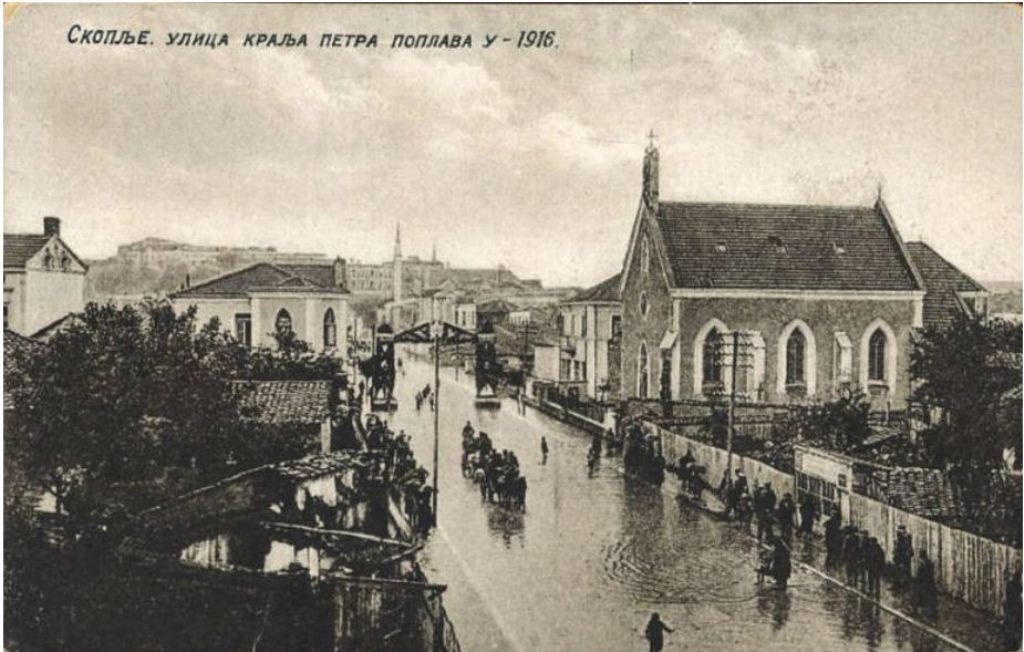
The year 1963 will always stay in the memory of the people of Skopje because of the catastrophic earthquake that struck the city. The old cathedral, which stood in the centre of the city, was destroyed in that same earthquake. On its site the “Memorial House of Mother Teresa” stands today. At that time the cathedral was the only Catholic church in Skopje. The Catholic community of Skopje therefore suffered more than material damage in the earthquake: it suffered spiritually, for it was left without a worthy place in which to celebrate the liturgy. Immediately after the earthquake the then bishop, Mgr Joakim Herbut, began the work of drawing up the plans for a new cathedral. In the meantime three huts were put up at Bit Pazar: one to serve as the church, the second as classrooms for religious instruction and the third as the parish house. The huts were meant to be no more than a temporary solution. But because the building of the cathedral dragged on, all church activity went on at this site until 1982.
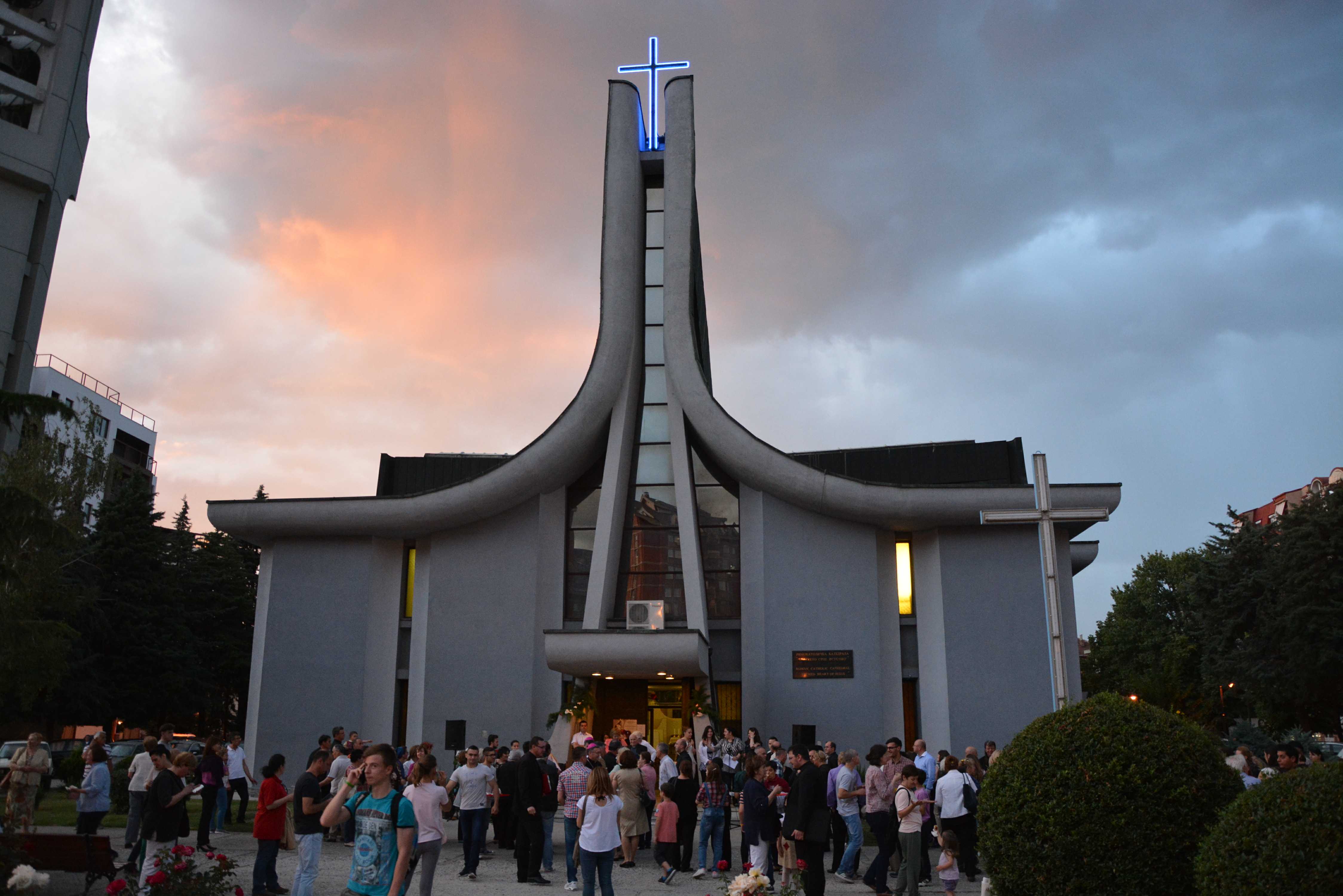
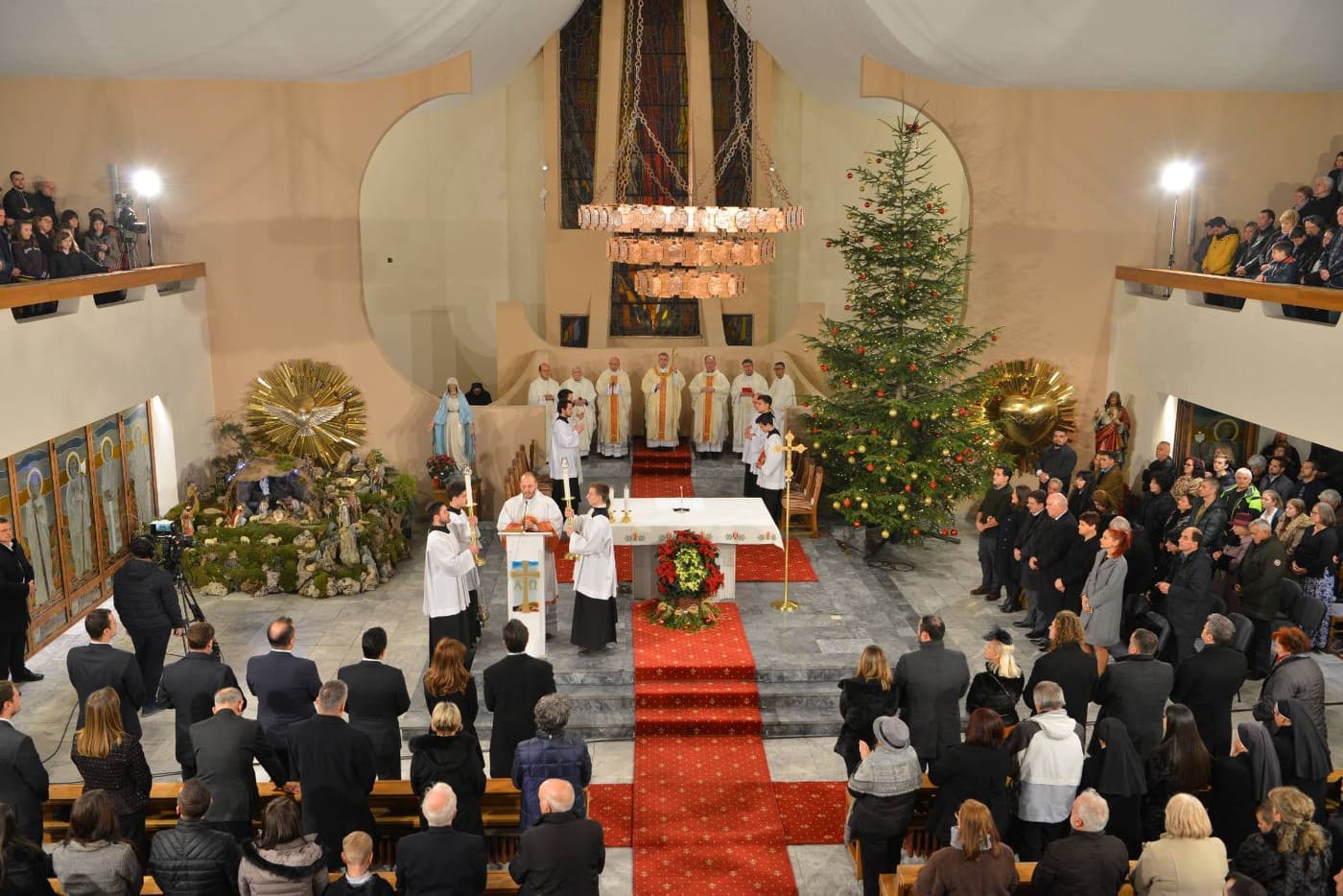
The plans for the new cathedral were drawn up by two architects, Slavko Đurić and Blagoja Micevski. Building began in 1975 and lasted 7 years, until 1982. The bishop’s director of the works was Mgr Antun Cirimotić.
The guiding idea for the outward form of the cathedral is the Old Testament image of the tent in which the Lord dwells. The cathedral is built in a modernist style.
Seen from outside, the most striking part of the cathedral is the roof structure, which crosses itself to form the shape of a Latin cross and then falls away, and in this way presents the image of a tent.
The central chandelier above the altar was made by the Sisters of the Holy Cross from Đakovo in Croatia. The guiding idea in making it was: Christ as the light, the centre and the meaning of everything! The sisters sought to give that image form in three rings, of which the uppermost is the largest and the lowest the smallest, and at the same time the nearest to the altar, showing that Christ is present in the bread and the wine on the altar, the centre and the meaning of our life.
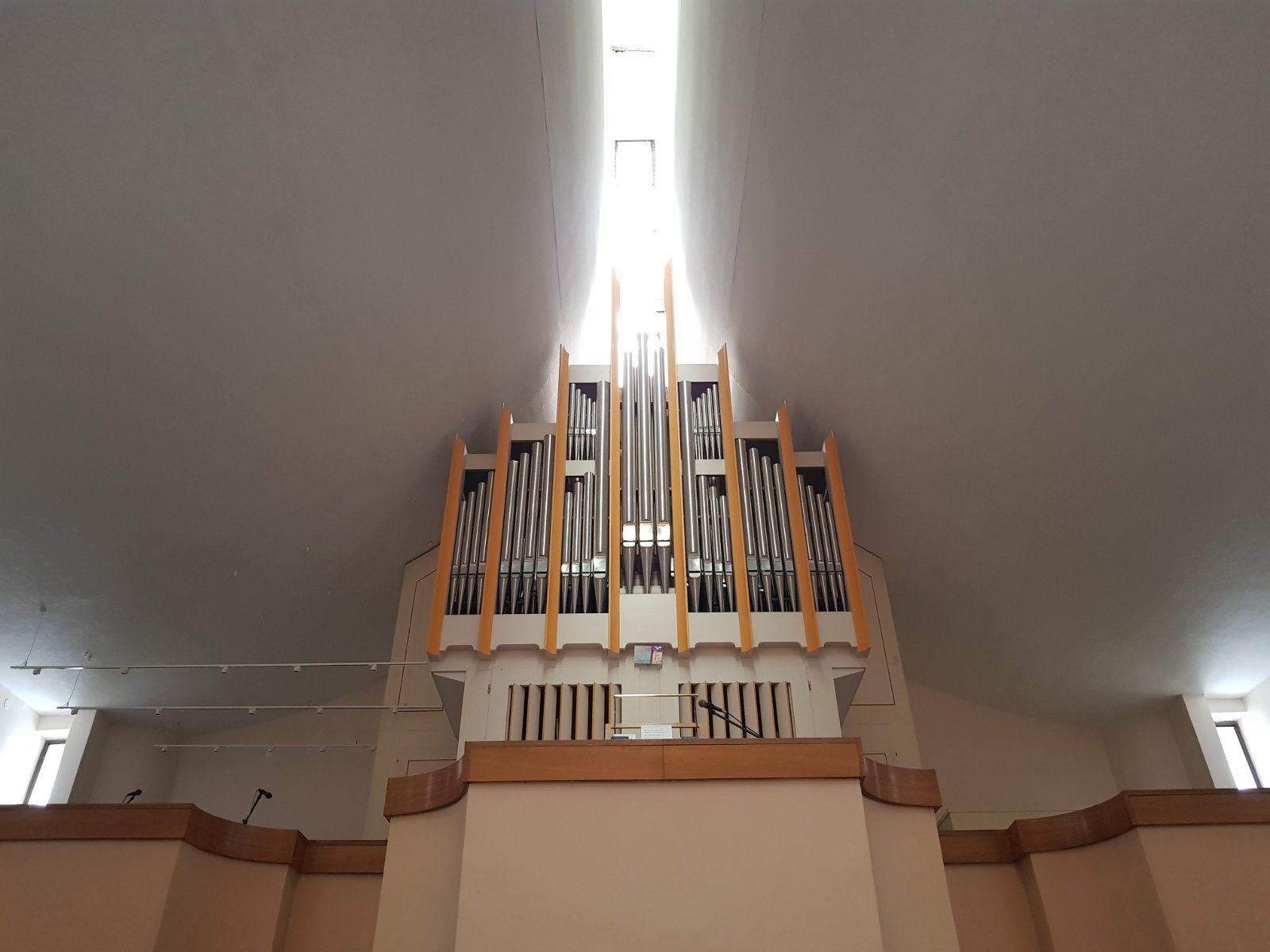
The organ is mechanical, built in December 2008, and it is the first and only organ in Macedonia. It was built in the diocesan workshop in Maribor, Slovenia, and has the following specification: two manuals; 26-28 stops; pipes from 15 cm to 5 m in height; and a total weight of 6 tonnes.
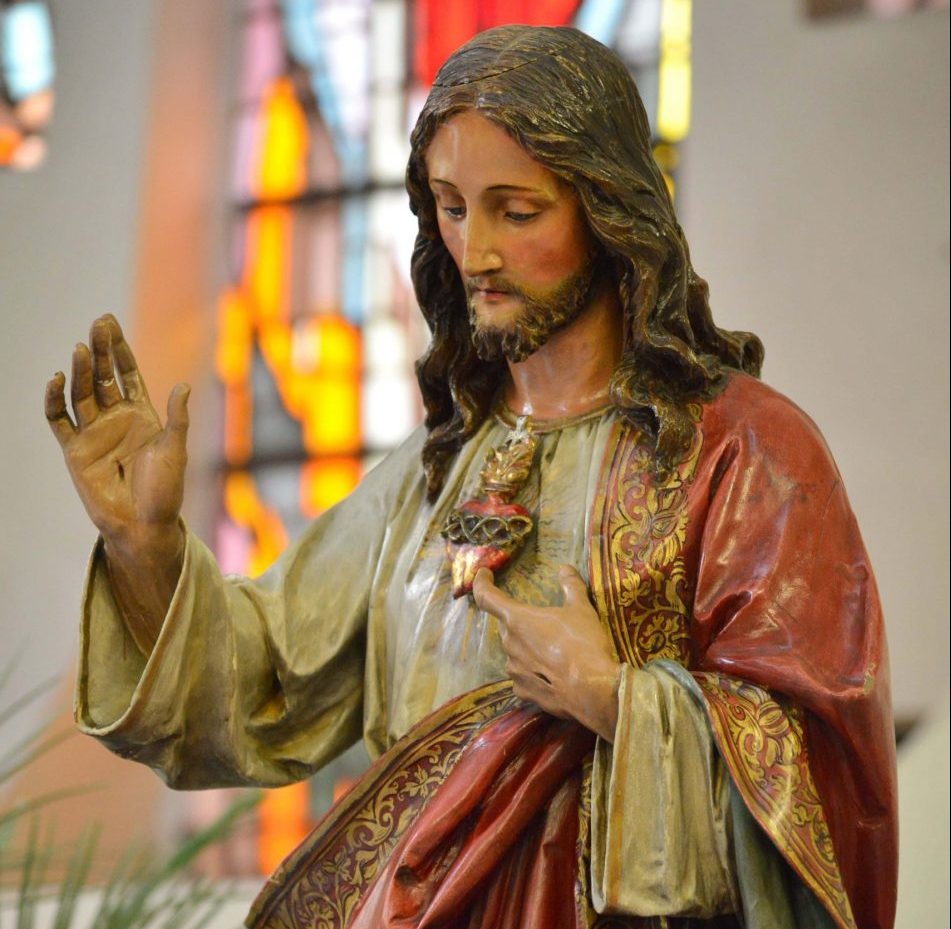
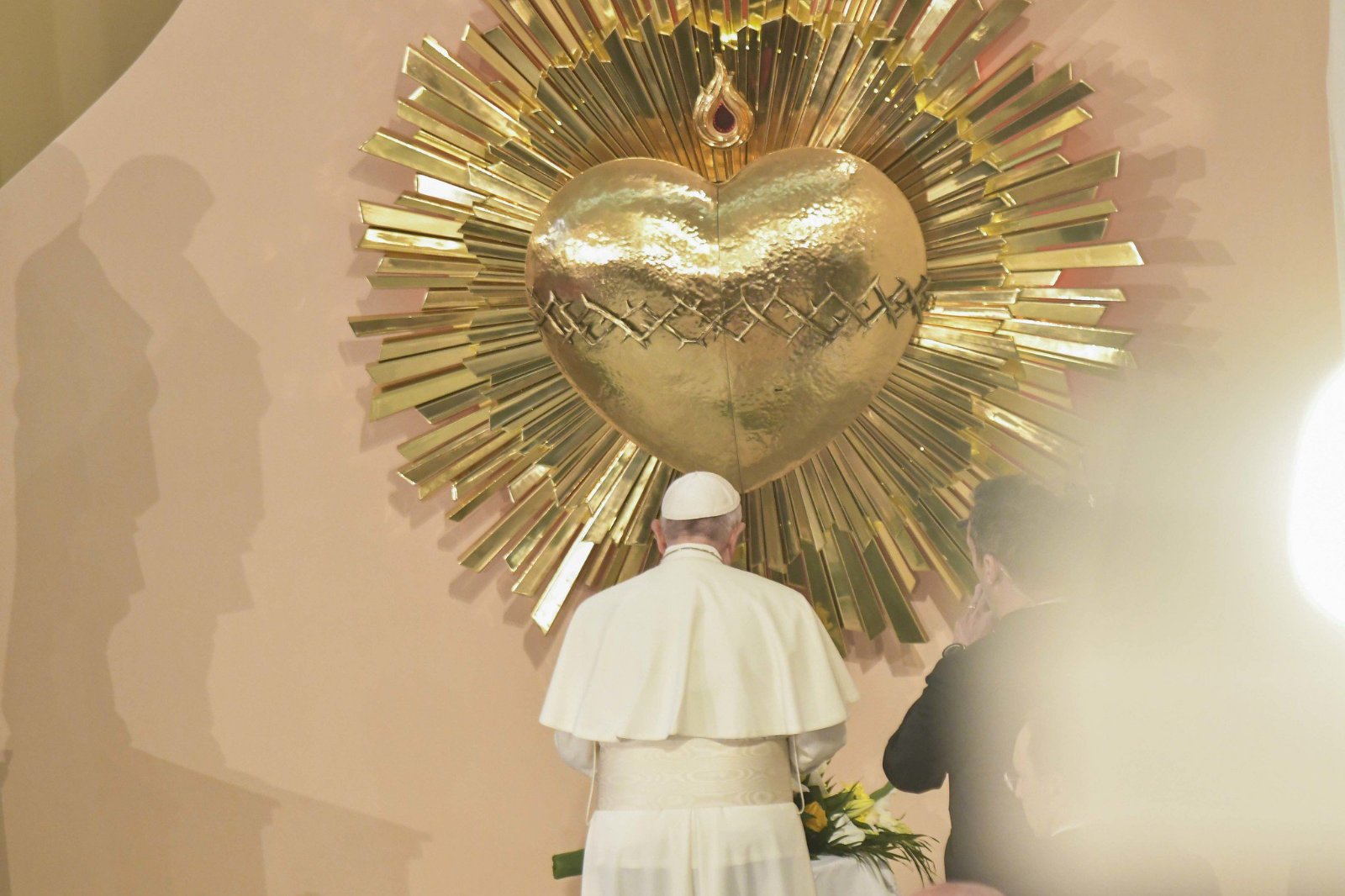
The cathedral holds the statue of the Most Sacred Heart of Jesus, the work of the Tyrolean school. This statue stood in the first cathedral, which was destroyed in the earthquake of 1963, and it has an important history, for as a girl St Mother Teresa prayed before it. On her visit to Skopje as a Missionary of Charity she prayed before the statue and said: “It all began here.”
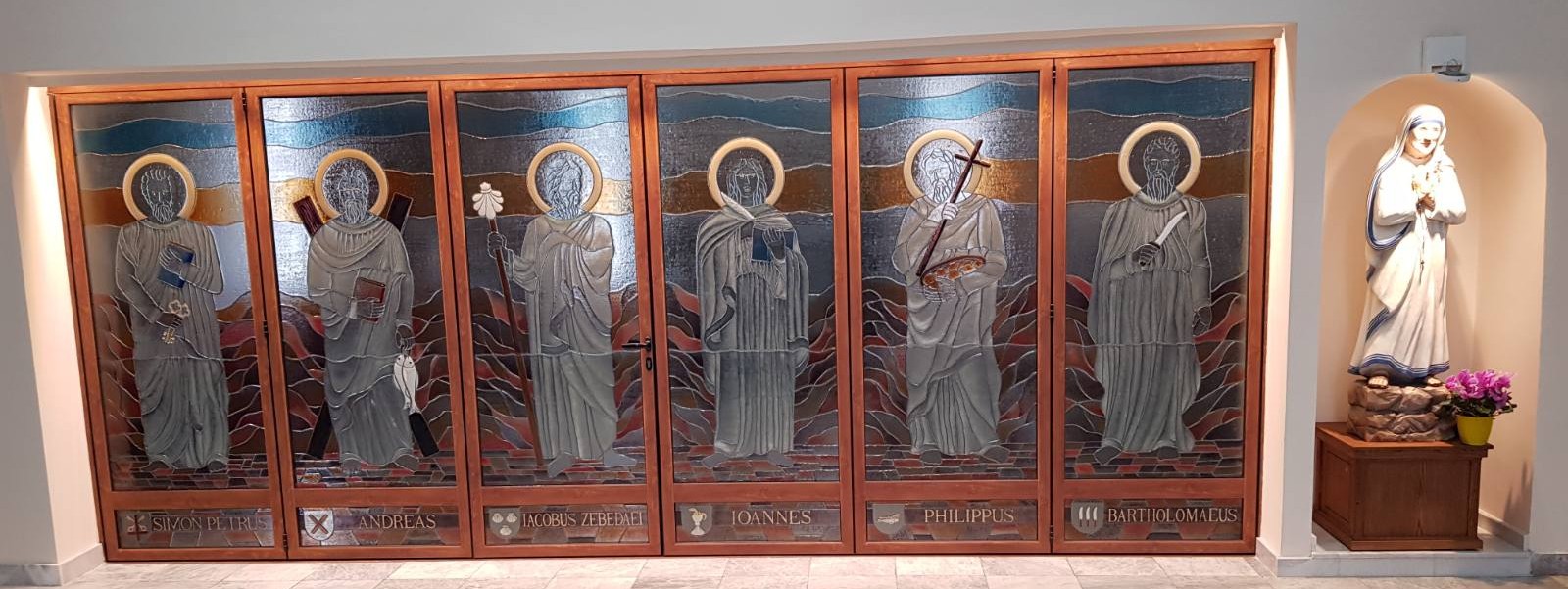
The central part of the cathedral of the Most Sacred Heart of Jesus, the nave, is divided from the transepts by 12 aluminium doors in two sets of 6, filled with 12 glass panels designed with the figures of the 12 apostles. The panels are made by hand in fused glass, each of them life-size: transparent, but with a background of colour and a marked texture of shadows, with the individual features of each apostle and with the symbols of his mission on this earth brought out.
They are there, strongly present in the space in spirit, witnesses of every visit to the cathedral, of every Mass and of every great feast when the doors of the cathedral open for the faithful. We are proud that they were also witnesses of Pope Francis’s meeting with the faithful in the cathedral during his historic visit to Skopje on 7 May 2019. The apostles are the work of the “Vitrum” (Art glass) studio of Skopje.
In the autumn of 2018 the bishop of Skopje and eparch of Strumica–Skopje, Mgr Dr Kiro Stojanov, had the cathedral renovated. An historic event for our country and for the Church in Macedonia was the apostolic visit of the Holy Father, Pope Francis, on 7 May 2019. On that occasion Pope Francis met the consecrated men and women in our cathedral, and the ecumenical and interreligious meeting with young people was held in the cathedral grounds.