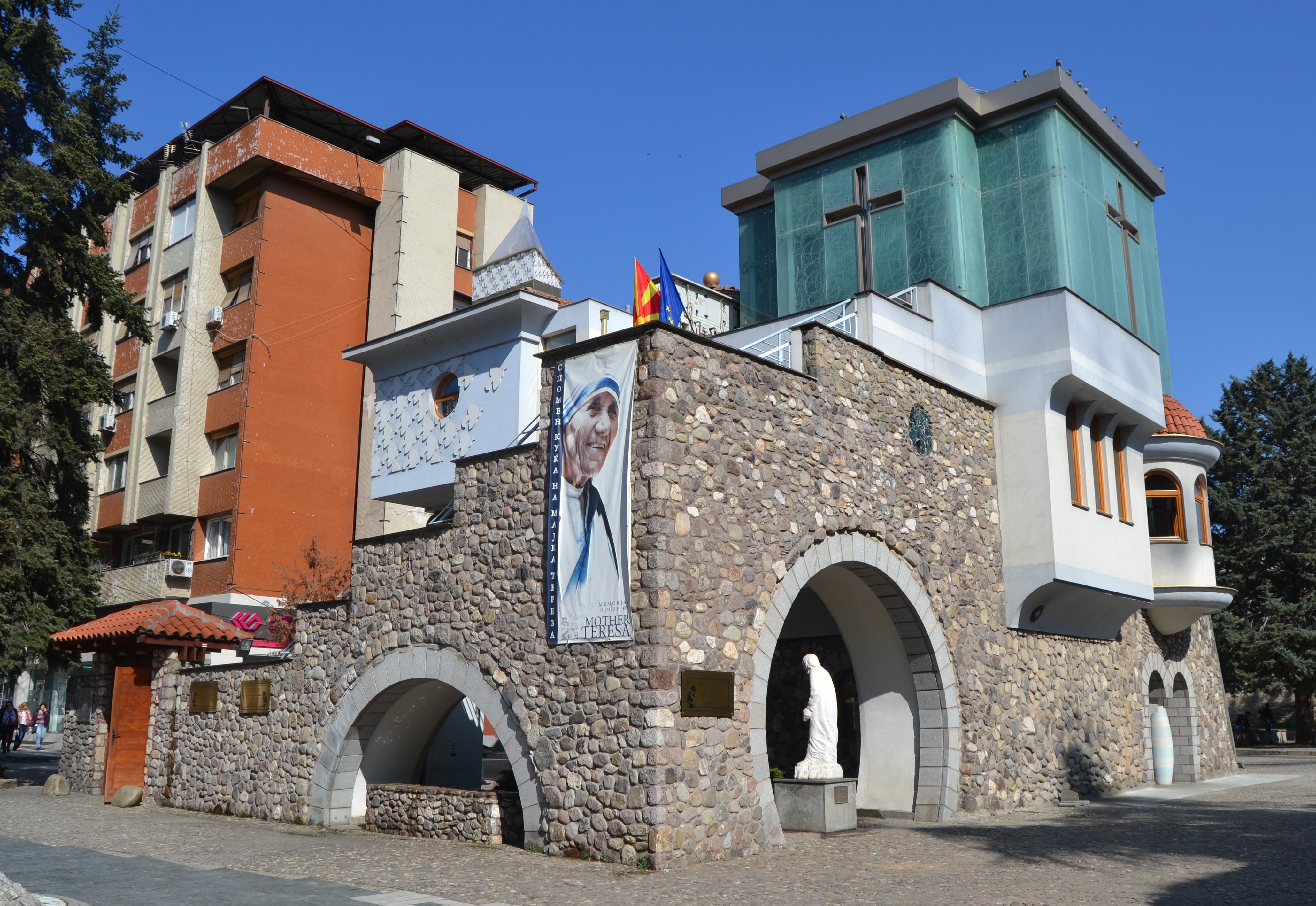
The wish to honour the best-known daughter of Skopje and the only Nobel laureate from Macedonia led at last to the long-cherished plan for a Memorial House of Mother Teresa. The foundation stone was laid for the occasion on 9 May 2008, and in only nine months the building dedicated to the most humane woman in the world was complete. The Memorial House was officially opened to visitors on 30 January 2009.
The site was not chosen by chance. On this spot, until the earthquake of 1963, stood the Catholic church of the Most Sacred Heart of Jesus, in which Mother Teresa — then Gonxha Bojaxhiu — was baptised just one day after she was born.
From its opening in 2009 to this day the Memorial House has received between 80,000 and 100,000 visitors a year, among them a great many heads of state, ministers, ambassadors and church dignitaries: Age, Mother Teresa’s niece; Cardinal Pietro Parolin, the Vatican Secretary of State; Fr Leo Maasburg, Mother Teresa’s biographer; Maria Prema, superior general of the Missionaries of Charity; and many others.
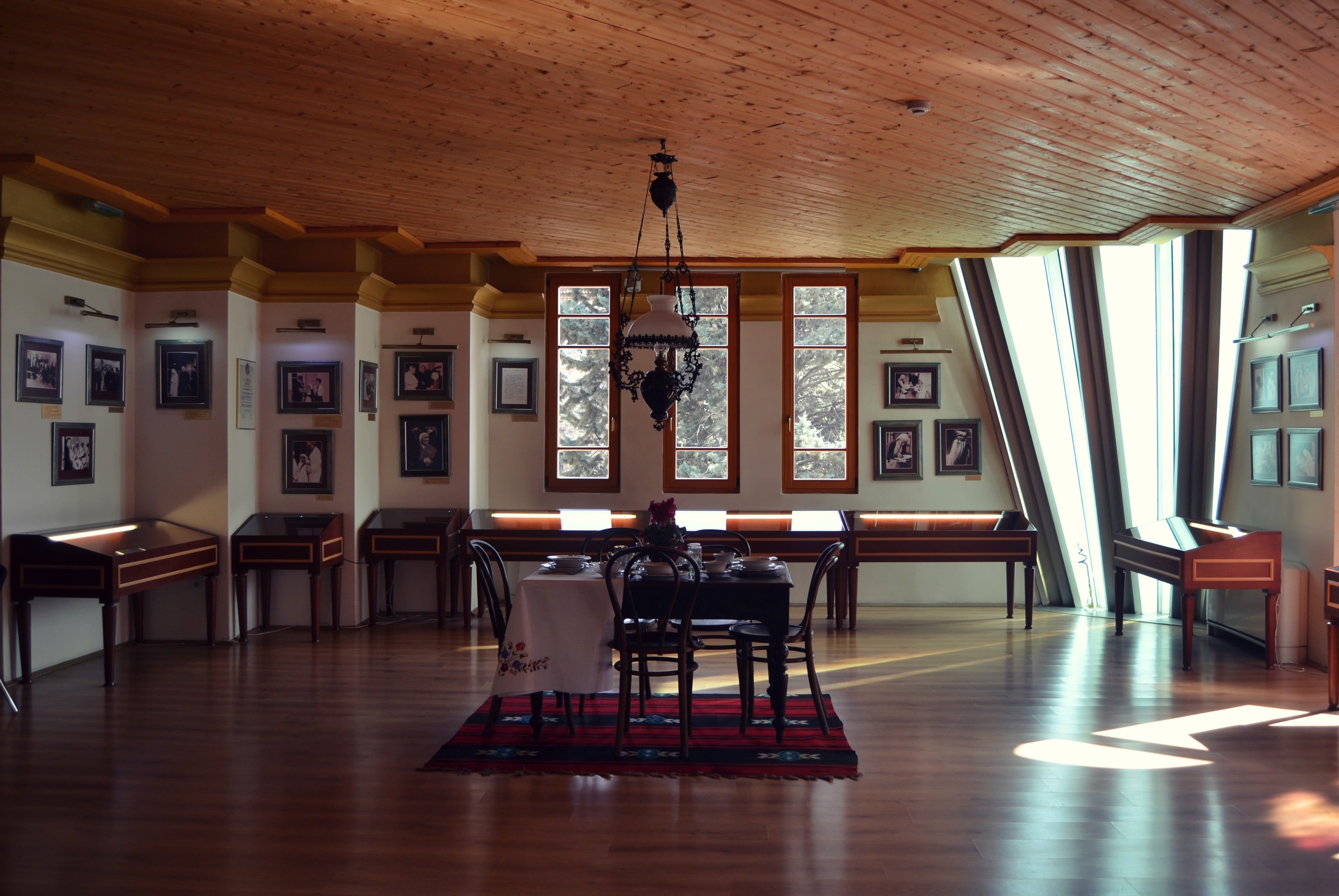
The interior of the exhibition space in the Memorial House of Mother Teresa was designed to recall a typical Macedonian town house of the early twentieth century.
The display opens with photographs of old Skopje from the beginning of the twentieth century, when Macedonia was still part of the Ottoman Empire, so as to convey the spirit of this part of the Balkans as a crossroads between the oriental East and the Christian West. The interweaving of cultures runs through every thread of daily life and is best seen in the furniture on show, the goldsmiths’ work, the clothing and so on.
The exhibition is conceived so as to follow the course of Mother Teresa’s life, from the childhood she spent in her native Skopje, through the years she spent as a Missionary of Charity, to her death, beatification and canonisation.
The most significant objects on display in the museum are the white sari with blue bands (a second-class relic), the sign by which she is recognised and at the same time the official habit of the Missionaries of Charity; a copy of the baptismal record issued by the Catholic church of the Most Sacred Heart of Jesus; and authorised copies of documents in her own hand and of the awards she received.
Among the documents on display are a prayer book written by Mother Teresa, a copy of the Nobel Peace Prize she received in 1979, and a copy of the letter she sent to the mayor of Skopje, Metodi Antov, on the occasion of the award.
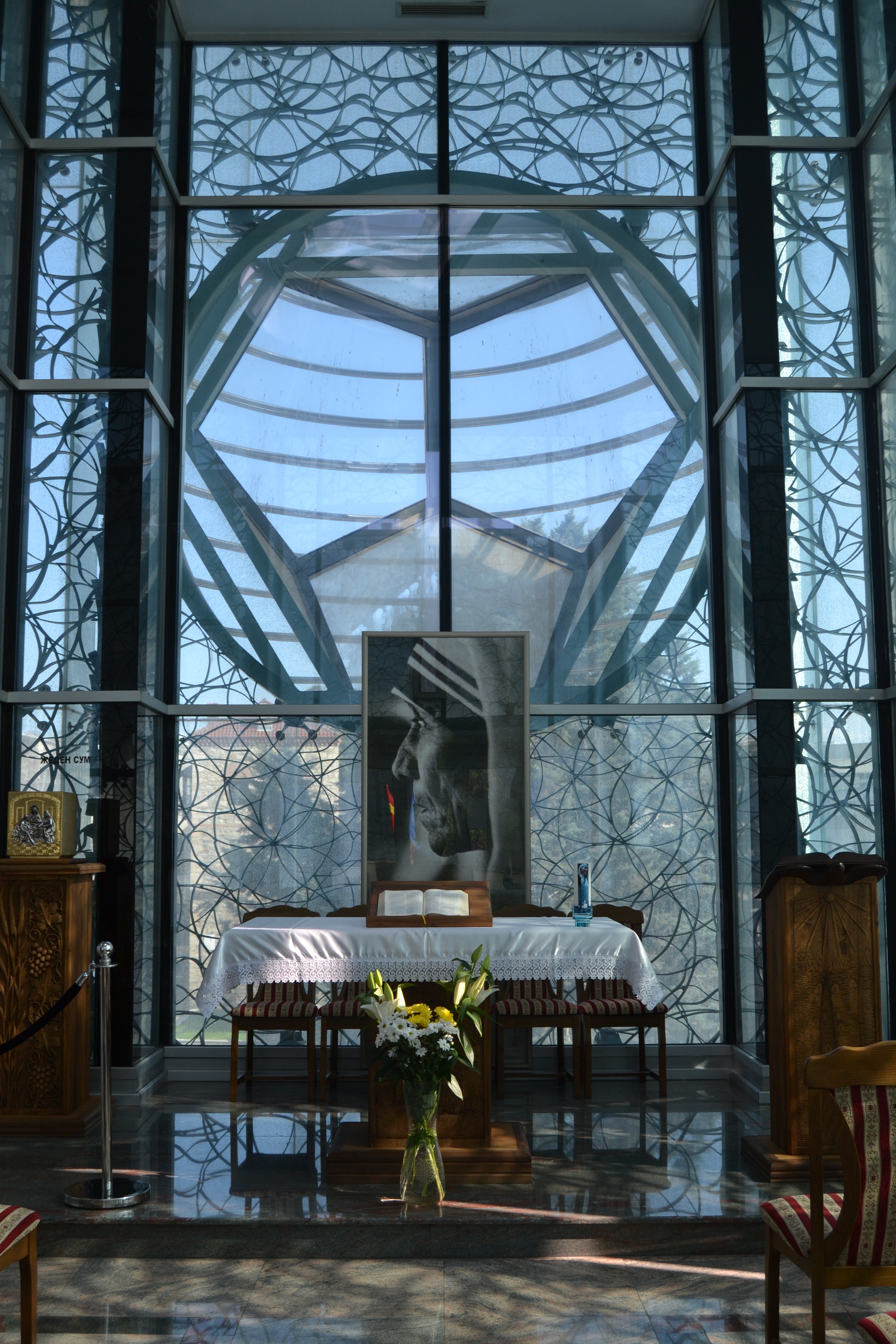
Above the exhibition space is a shrine of St Mother Teresa, where Masses are celebrated. At the solemn Masses connected with important dates in Mother Teresa’s life, her first-class relic is exposed for veneration.
(the text and the photographs are taken from https://memorialhouseofmotherteresa.com/ )